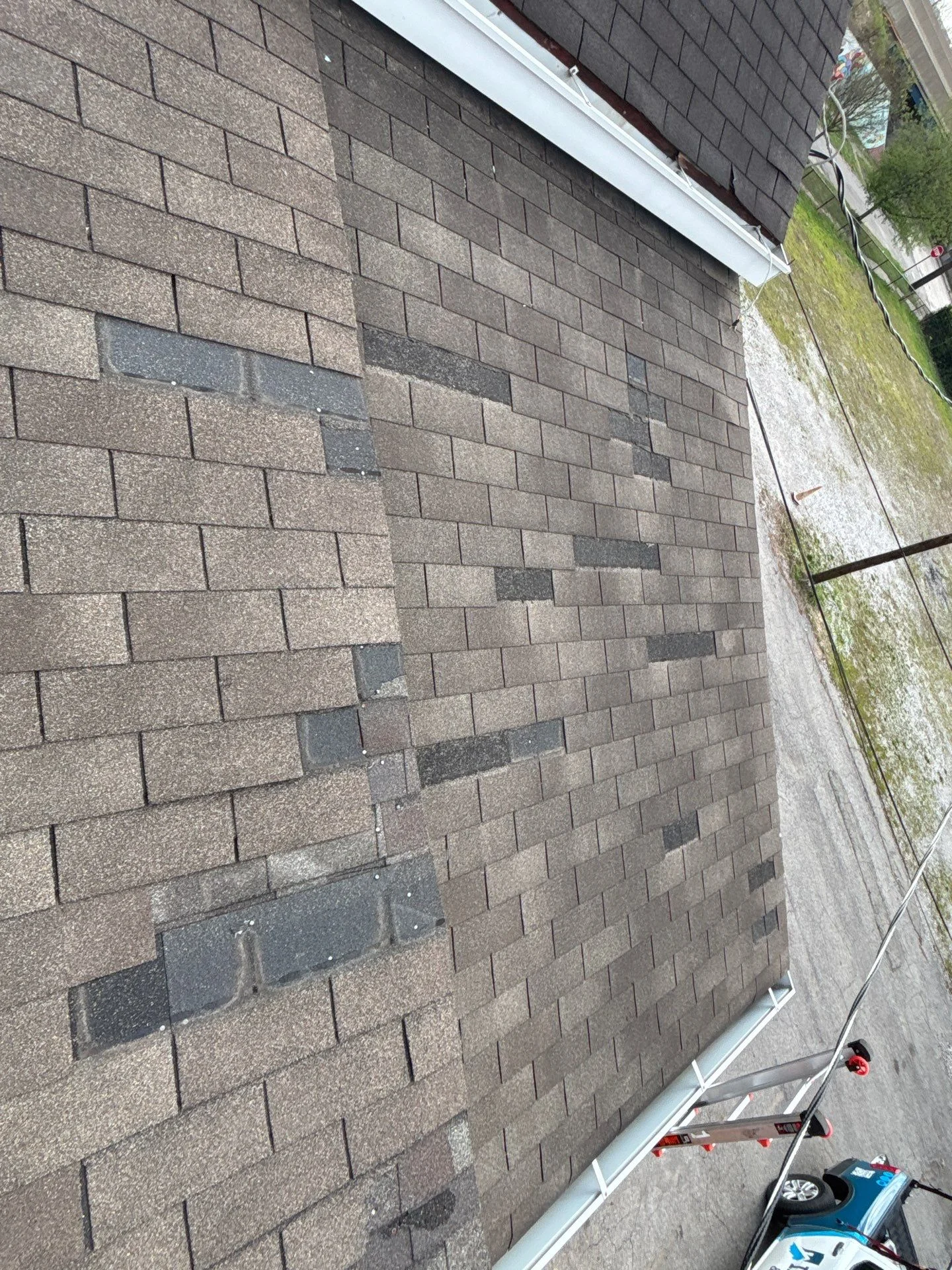
How do I know if my roof has hail damage?
You can look for the key signs of hail damage: dark spots or bruises on shingles where granules have been knocked off exposing the asphalt, often randomly distributed; granules collecting in the gutters; and dents on soft metals like gutters, downspouts, vents, and flashing. Indirect signs, like a dented AC unit, also point to a damaging storm. For a Swayzee homeowner, checking these safely from the ground helps you gauge the likelihood. So you know by looking for these signs, with a professional inspection confirming it. Understanding the signs helps you check, though because hail damage is hard to assess accurately from the ground, a professional inspection is the reliable way to confirm whether your roof has hail damage, so checking the signs yourself and getting a professional inspection when warranted gives you a dependable answer for your home.
What does hail damage look like on shingles?
On shingles, hail damage typically looks like dark spots or bruises where the impact has knocked off the protective granules, exposing the underlying asphalt, often randomly distributed since hail falls randomly. You may also see granule loss, dents, or a pockmarked appearance. For a Swayzee homeowner, these are the visual signs to look for, though they can be hard to see from the ground. So hail damage on shingles looks like random dark spots with missing granules. Understanding this appearance helps you recognize it, since the random pattern of dark, granule stripped spots is the classic hail indicator, distinguishing it from wear, so looking for this pattern, ideally with binoculars from the ground, helps you spot it, with a professional inspection confirming the damage up close where it can be assessed safely and accurately for your home.
How big does hail need to be to damage a roof?
Hail can damage a roof at varying sizes depending on factors like the shingle condition, wind, and the hail's density, with larger hail generally causing more damage, though even smaller hail can cause some wear over repeated events. For a Swayzee homeowner, this means there is no single size that damages a roof, but larger hail is more likely to. So hail damage is not tied to one size, with larger hail more damaging. Understanding this helps you set expectations, since the damage depends on multiple factors rather than a fixed hail size, so after any significant hail, checking for signs is sensible, with larger hail or a severe storm making damage more likely, and a professional inspection determining whether your roof was actually damaged regardless of the exact hail size for your home and situation.
Can hail damage cause leaks?
Yes, hail damage can lead to leaks over time, since the bruising, cracking, and granule loss it causes can compromise the shingles and expose the roof to the elements, potentially allowing water in as the damage worsens, though leaks may not appear immediately. For a Swayzee homeowner, this means unaddressed hail damage can eventually cause leaks. So hail damage can cause leaks, often over time rather than immediately. Understanding this helps you see why addressing it matters, since the damage can weaken the roof's protective surface and integrity, which can lead to leaks and accelerated aging if left unaddressed, so identifying and repairing hail damage helps prevent leaks and further deterioration, making a professional inspection and timely repair worthwhile after significant hail to protect your roof and home from eventual water intrusion.
Should I get on my roof to check?
No, you generally should not climb on your roof to check for hail damage, since roofs are dangerous to walk on, especially when damaged or wet, and a fall can cause serious injury. Instead, check from the ground with binoculars and inspect accessible surfaces, leaving close, on roof inspection to a professional. For a Swayzee homeowner, staying on the ground is the safe approach. So you should not get on the roof; check from the ground and leave on roof inspection to a pro. Understanding this helps you stay safe, since getting on the roof is hazardous and hail damage is hard to assess up there anyway, so looking from the ground and having a professional, with proper equipment and experience, do any close inspection is the safe way to check, protecting you from injury while still assessing the roof for your home.
What should I do if I find hail damage?
If you find signs of hail damage, document what you find with photos and note the storm date, then get a professional roof inspection to confirm and assess the damage, and if it is confirmed, consider your repair options and any insurance claim. For a Swayzee homeowner, a professional inspection is the key step, providing an accurate assessment and supporting any claim. So document it and get a professional inspection, then act on the findings. Swayzee Roofing provides roof inspections for Swayzee homeowners and can confirm and assess suspected hail damage. Understanding what to do helps you respond effectively, since rather than leaving hail damage unaddressed, where it could lead to leaks, documenting it and getting a professional inspection, then acting on the findings, protects your roof. Call (765) 676-3217 if you suspect hail damage and want a professional inspection for your home.
Should I get a professional inspection?
Yes, getting a professional roof inspection is the reliable way to confirm hail damage, since it is hard to assess accurately from the ground, particularly after a significant hail storm or when you see signs. A qualified roofer can inspect the roof closely and safely and accurately identify and assess hail damage. For a Swayzee homeowner, a professional inspection is worthwhile when hail damage is suspected. So yes, a professional inspection is the dependable way to confirm and assess hail damage. Understanding its value helps you get an accurate answer, since rather than relying on an uncertain look from the ground, a professional inspection determines whether and how much the roof was damaged, which is valuable for repairs and any insurance claim. Swayzee Roofing provides roof inspections for Swayzee homeowners, so a professional inspection is the sensible step when you suspect hail damage for your home.
Do granules in the gutter mean hail damage?
Granules in the gutter after a hail storm can indicate hail damage, since hail knocks granules off shingles and they wash into the gutters, but some granule loss also occurs from normal aging, so it is one sign among several rather than definitive on its own. For a Swayzee homeowner, granule buildup after hail is a useful indicator worth noting. So granules in the gutter can indicate hail damage, especially after a storm. Understanding this helps you interpret it, since granule loss reflects the shingles losing their protective surface, making it a useful sign after hail, though because aging can also cause granule loss, combining it with other indicators, like dents on metal surfaces, and getting a professional inspection confirms whether hail damage is present, so granules in the gutter after hail are a reason to look further for your home.
Is hail damage always visible?
No, hail damage is not always easily visible, particularly from the ground, since the bruising and granule loss on shingles can be subtle and sometimes only apparent on close inspection, and the damage may not cause immediate leaks. For a Swayzee homeowner, this means hail damage can be present even when not obvious. So hail damage is not always easily visible, especially from below. Understanding this helps you take it seriously, since the absence of obvious signs does not always mean the roof is undamaged, as hail damage is often subtle and its effects can be delayed, so after a significant hail storm, especially with indirect signs of severity, a professional inspection is the reliable way to determine whether the roof was damaged, even when nothing obvious is visible from the ground for your home.
Can I see hail damage from the ground?
You can sometimes see signs of hail damage from the ground, especially dents on gutters, downspouts, and vents and granules in the gutters, and you can use binoculars to look at the shingles, but the shingle damage can be subtle and hard to assess accurately from below. For a Swayzee homeowner, this means a ground level check can reveal signs but may not confirm the full extent. So you can spot some signs from the ground, but not always confirm the damage. Understanding this helps you set expectations, since while checking from the ground with binoculars and inspecting accessible surfaces can reveal indicators, hail damage is often hard to assess accurately from below, so a professional inspection is the reliable way to confirm and assess it, making the ground level check a useful first step rather than a definitive assessment for your home.
Does insurance cover hail damage?
Hail damage is often covered by homeowners insurance, since it is a form of storm damage, though coverage varies by policy, insurer, and location, so checking your policy and confirming with your insurer is necessary. For a Swayzee homeowner, this means a claim may be possible, with a professional inspection documenting the damage to support it. So hail damage is often covered, but it depends on your policy and insurer. Understanding this helps you take the right steps, since because hail damage may be covered, identifying it and getting a professional inspection to document it can support a claim, though the specifics of coverage, deductibles, and the process depend on your policy, so reviewing your coverage and discussing the damage with your insurer clarifies your situation rather than assuming coverage either way for your home.
How soon should I check after a storm?
It is sensible to check for hail damage reasonably soon after a hail storm, once it is safe to do so, since identifying damage early lets you address it before it leads to leaks or further deterioration. For a Swayzee homeowner, a ground level check after the storm passes and a professional inspection if signs appear are prudent steps. So check reasonably soon after the storm, once it is safe. Understanding the timing helps you respond, since while there is no need to rush into danger, checking for signs once conditions are safe, and getting a professional inspection if warranted, helps you catch hail damage before it worsens, so a timely but safe check after a significant hail storm is the sensible approach, with any insurance claim also typically benefiting from prompt attention for your home.